
Products > ALLRIS Extended
ALLRIS Extended
Advanced Multi-Camera Inspection for
Complex Quality Control Tasks
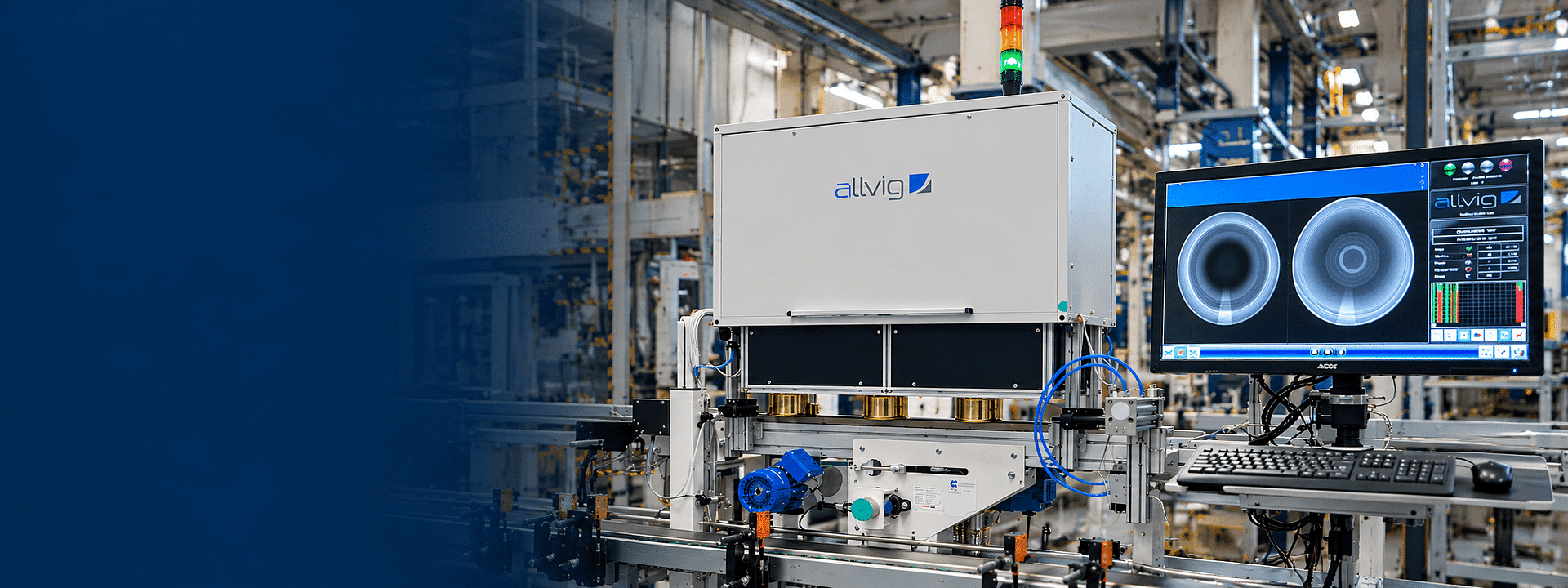
ALLRIS Extended builds on the proven ALLRIS Standard platform, offering advanced inspection capabilities through flexible multi-camera configurations and application-specific illumination.
Option 1 – Dual-Station Inspection: Two cameras capture the same product at two different positions within a single light box. Both images are evaluated together as one inspection unit.
Option 2 – Multi-Camera Inspection: Multiple cameras capture the same product at a single inspection position within one light box. All images are evaluated together as one inspection unit.
Option 1 – Dual-Station Inspection: Sharp Images from Top to Bottom
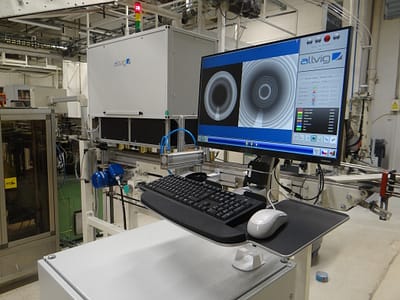
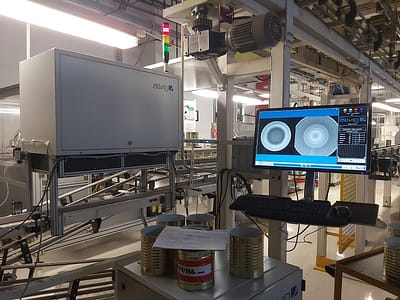
ALLRIS Extended Option 1 uses two inspection stations within a single light box. The first station captures the upper half of the can, while the second station captures the lower half. Both images are processed and evaluated together as one inspection unit.
Each station is equipped with its own camera and individually optimized illumination. This configuration ensures sharp, high-contrast images across the entire can height, enabling reliable inspection of different surface areas and defect characteristics.
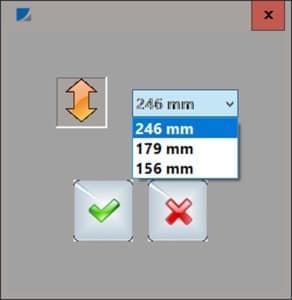
The base configuration includes motorized height adjustment of the light box, controlled directly through the ALLRIS software.
Motorized Light Box Positioning
The integrated motorized height adjustment allows the light box to be positioned according to the height of the cans being inspected.
The positioning mechanism is driven by a stepper motor and controlled through the ALLRIS software. Operators can select the required position directly from the user interface.

Technical Specifications
Dual-Station Configuration
| Parameter | Specification |
|---|---|
| Inspection stations | 2 stations within one light box |
| Camera configuration | 2 color cameras, 1.5 MP each (one per station) |
| Inspection area – Station 1 | Upper half of the can |
| Inspection area – Station 2 | Lower half of the can |
| Image quality | Sharp, high-contrast imaging across the entire can height |
| Illumination | Dedicated lighting for each station |
| Height adjustment | Motorized, stepper-motor controlled |
| Height control | Integrated into ALLRIS software |
| Product feed | Separated products |
Specifications refer to the base configuration and can be adapted to individual customer requirements.
Option 1 – Base Configuration: Included Components
| Component Group | Description |
|---|---|
| Control Cabinet & Power Supply | Industrial control cabinet, air-conditioning, UPS and electrical mounting components |
| Industrial Computing | Industrial PC with processing, camera and lighting control components, running Windows 11 Pro (64-bit). |
| Camera & Optics | Two industrial color cameras, one per inspection station, including lenses and data cables |
| Illumination System | Dual-station light box with dedicated illumination for each station and lighting control components |
| Motorized Height Adjustment | Stepper motor, motor controller, driver and spindle mechanism for automatic light-box positioning |
| Sensors & Product Tracking | Photoelectric and inductive sensors, rotary encoder and associated accessories |
| Sorting & Signaling | Ejection valve and signal tower included; reject chute available as an option |
| Operator Interface & Software | Monitor, mounting bracket, keyboard, mouse and proprietary ALLRIS software license |
Technical Details & Inspection Features
Option 2 – Multi-Camera Inspection: Up to Five Cameras in One Light Box
ALLRIS Extended Option 2 can be configured with up to five cameras at a single inspection position within one light box. All cameras capture the same product, and their images are processed and evaluated together as one inspection unit. This configuration provides flexible inspection capabilities for complex products and demanding quality control applications.
Each camera can be equipped with application-specific optics and illumination to inspect different product areas and characteristics. The camera arrangement, optics and lighting are individually adapted to the product geometry and inspection requirements.
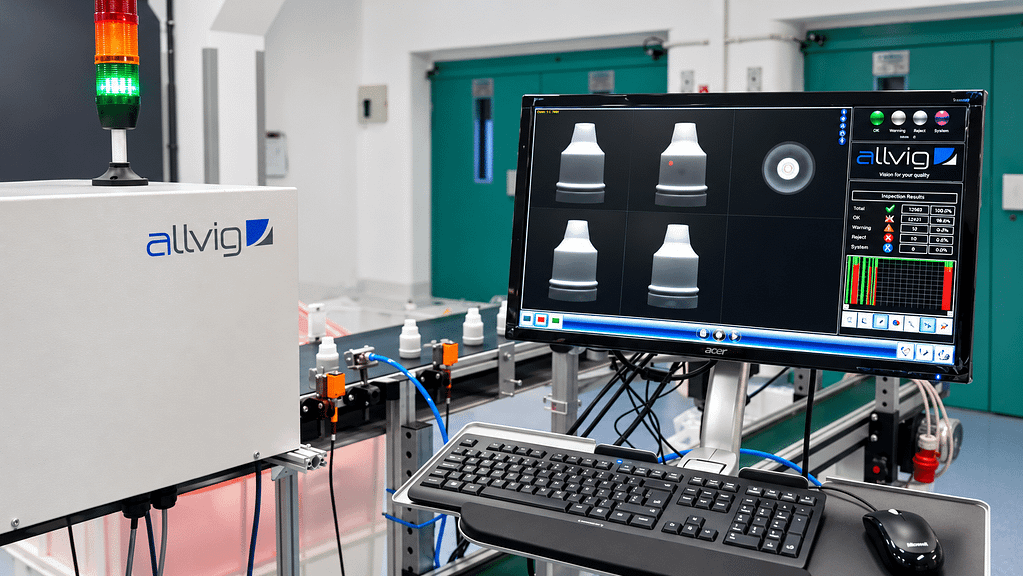
Four side-view cameras and one top-view camera capture the same product at a single inspection position. All five images are evaluated together as one inspection unit.
One Trigger – Simultaneous Image Acquisition
A single trigger signal initiates simultaneous image acquisition from all cameras, enabling different product areas and characteristics to be captured at exactly the same time.
Sorting & Ejection Options
ALLRIS Extended supports reliable identification and tracking of defective products throughout the inspection process.
An ejection valve is included in the base configuration, enabling defective products to be removed at the designated rejection station.
An optional reject chute is available to guide rejected products away from the production line. The sorting and rejection arrangement can be adapted to the production process and individual customer requirements.
ALLRIS Extended – Starting Price
Option 1 – Dual-Station Configuration
From € 28,100 excl. VAT
The starting price applies exclusively to Configuration No. 1, designed for cans with diameters of 60–80 mm and heights of 50–120 mm, as specified in the table below.
Configurations No. 2 and No. 3: Price on request.
Final pricing depends on the selected configuration and application requirements. Optional equipment is quoted separately.
Available Dual-Station Configurations
| Nr. | Diameter | Heights | Production speed | Resolution | Price |
|---|---|---|---|---|---|
| 1. | 60 – 80 mm | 50-120 mm | up to 900 cans per minute | 1,5 MP | Starting from € 28,100 |
| 2. | 80 – 120 mm | 50 – 250 mm | up to 500 cans per minute | 3,2 MP | On request |
| 3. | 120 – 160 mm | 150 – 250 mm | up to 200 cans per minute | 5 MP | On request |
ALLRIS Extended – Option 2: Multi-Camera Configuration
Price on request
The price for Option 2 depends on the number of cameras, the required optics and illumination, and the specific inspection task. Each system is individually configured to meet the customer’s application requirements.